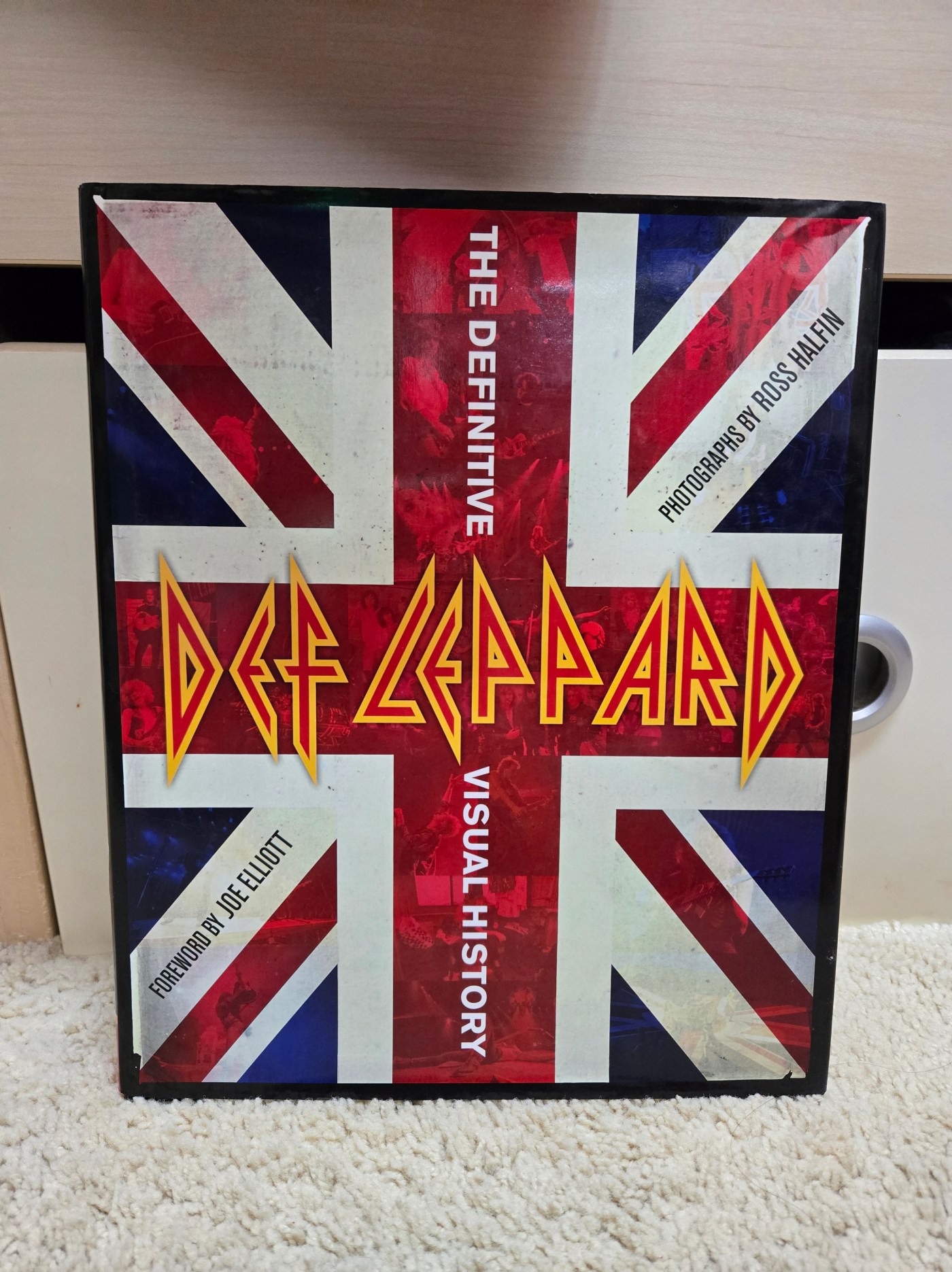
The rock ‘n’ roll gods blessed me with another Def Leppard book and even better, it’s a picture book! The book is called, Def Leppard: The Definitive Visual History. It was published in 2011, so it covers the band’s early years to the Songs from the Sparkle Lounge (2008) album. My older sister sent me this book and coincidently, she asked me about it the day I was seeing Def Leppard for the second time this past February. I heard about the book a few years ago when John T. Snow from 2loud2oldmusic reviewed it on his blog. Of course, I needed this book in my library, so my sister bought me a used copy off eBay and sent it to me; I paid her back. Now that I’ve finished reading it, I’m ready to share with you guys my thoughts on Def Leppard: The Definitive Visual History.
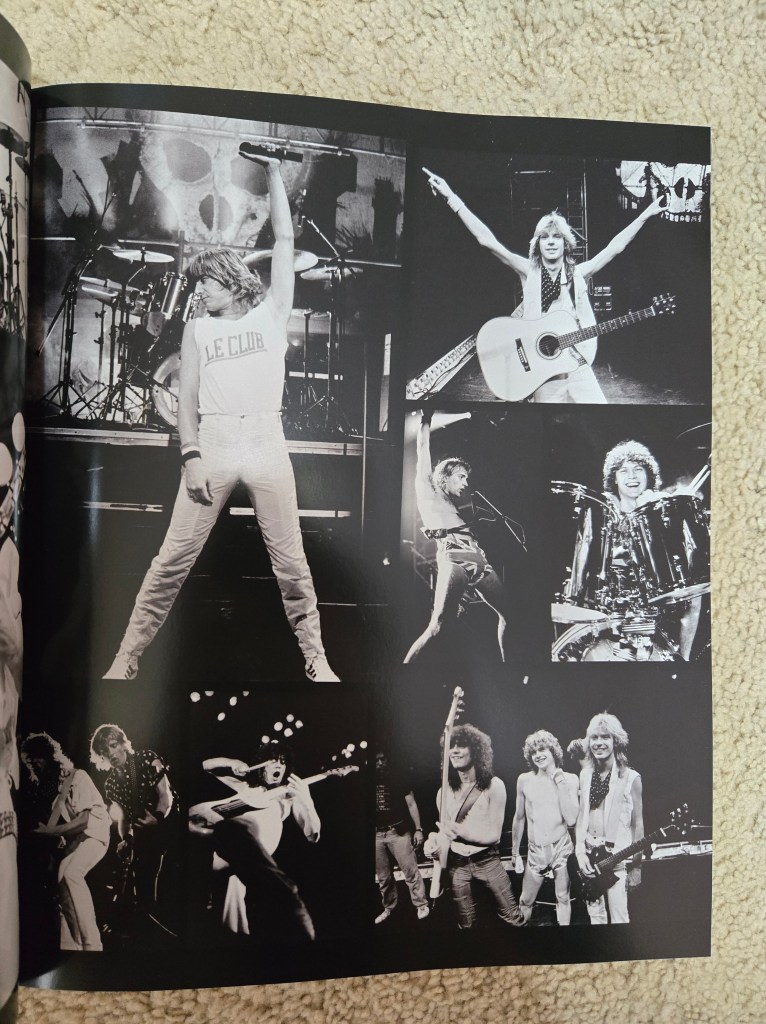
All of the photos were taken by Ross Halfin, a legendary rock photographer who has taken photos for so many talented artists such as Metallica, The Black Crowes, Iron Maiden, Foo Fighters, Ozzy Osbourne, and more. Def Leppard: The Definitive Visual History isn’t just a picture book, however. There is a foreword provided by Joe Elliott, photo captions, and essay-like descriptions here and there. Since the band has had a consistent lineup since 1992 with a few member swaps before that, it was cool to see how the band changed appearance-wise throughout the years in terms of hairstyles and clothes. The photos are gorgeous and glossy, and there are photos that I’ve never seen before. They weren’t all duplicates from the Definitely: The Official Story of Def Leppard (2023) book, which I appreciated. One of my favorite photos of the band was taken in Las Vegas at the Four Queens hotel; it’s from the later years with Vivian Campbell.
Also, there are stories that I’d never heard before. My favorite story revolves around Steve Clark when Robert Plant came to see Def Leppard in Chicago. Impressed with Clark’s Jimmy Page persona, Plant asked Clark if he wanted to join his band. Interestingly enough, Clark considered joining Plant’s band and Halfin had to talk him out of it, thank goodness. But just think what could’ve happened if Clark took Plant’s offer. On the same page, Halfin recalls the last time he saw Clark, which was at a Queensrÿche show, where he asked Halfin for cocaine. The circumstances were not great given his father was with him and his alcoholism was taking its toll on him. This book widened my eyes to Clark’s personal struggles that led him down that dark path.
Being an aspiring music journalist, I also enjoyed music journalist Paul Elliott’s essay in the book where he talks about how he got into Def Leppard, when he first saw them live, and his favorite memory with them. I love reading about what it was like in the ‘80s because of how different it was back then as far as the music scene goes. Paul became a Def Leppard fan in 1983 after hearing Pyromania for the first time; his friend taped the album for him in exchange for a tape of Dio’s Holy Diver when Campbell was in the band. The reason why he didn’t see Def Leppard on the Pyromania tour was because he already blew his money on tickets to see Rush and Gillan. I’m still shocked by the fact that Paul used to work part-time at a garden center; the things people had to do before getting their dream jobs. Luckily, he saw Def Leppard live three years later at the Monsters of Rock Festival at Donington Park in 1986; it was the day Rick Allen made his triumphant return following his car accident.
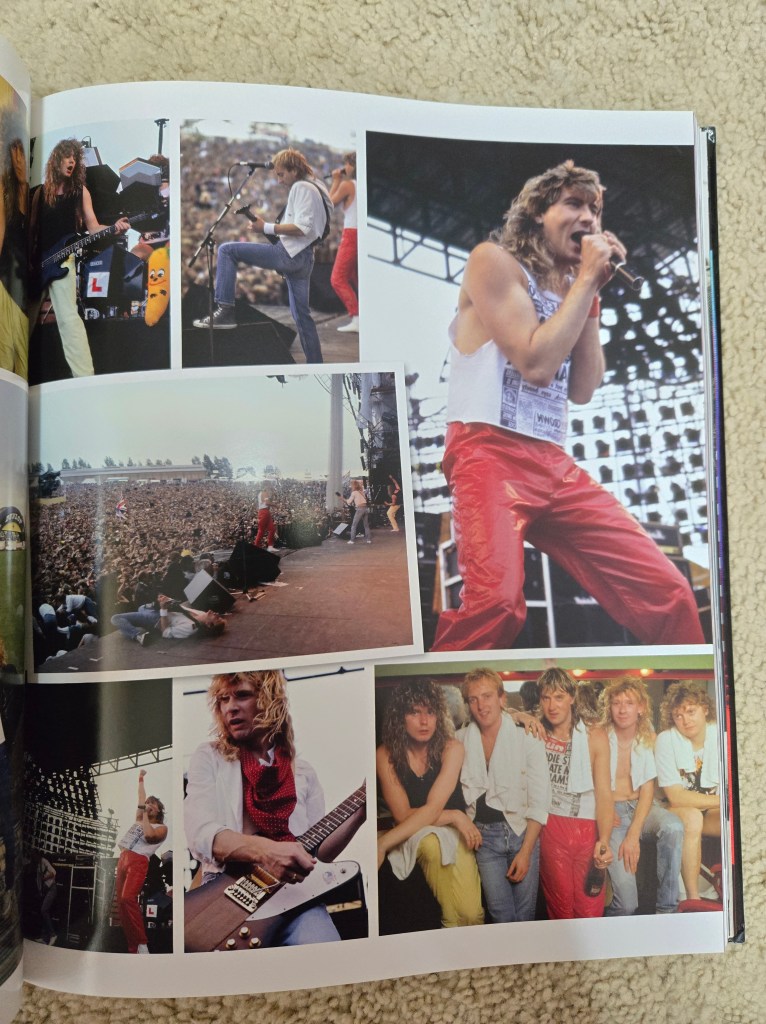
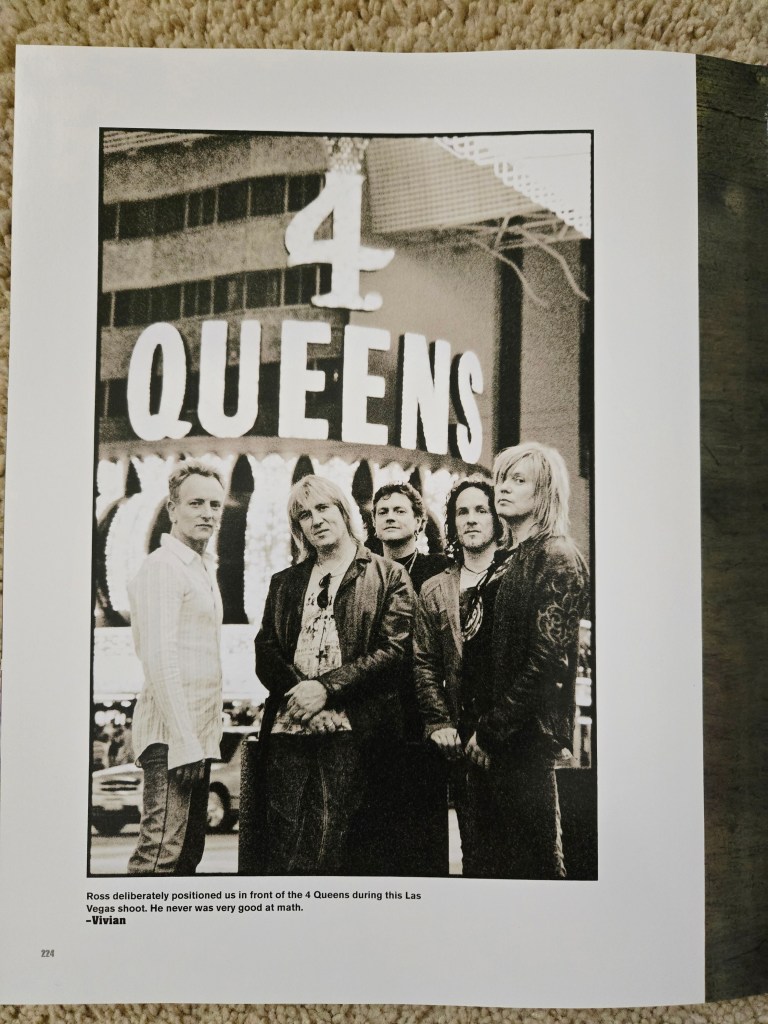
The Four Queens photo I referred to earlier.
Part of being a music journalist is being able to take excellent photos. I used to think close-up shots were more important than stage photos from farther away. However, that’s not true because Halfin does a combination of close-up band photos and far away band photos. On the Hysteria tour, the stage was set up in-the-round, which meant there were four front rows. Since almost all of the band members would be running around the stage (Allen was seated in the middle of the stage on his drum kit), the band decided to put Halfin on the lighting truss, 25 feet above the stage, to get the action shots he needed. The stage used for the Hysteria tour was nice and very colorful, so it definitely stood out in the far away shots. It didn’t matter if the band was far away, as long as there was something that grabbed viewers’ attention in the photographs, whether it was the vibrant lights, flashing lasers, or giant curtains. Looking at Halfin’s photos gave me a sense of relief because I know that I won’t be screwed for concert photos just because I don’t have general admission…as long as the stage is picture-worthy.
Overall, I’m very happy with Def Leppard: The Definitive Visual History because the photographs are stunning and the book was a quick read. I finished it in two days, but I probably could’ve finished it in one day because it wasn’t a word-extensive book, if that makes sense? I loved looking through Def Leppard’s history and reading about each member’s recollections of their time in the band. Def Leppard may not be the biggest band in the world anymore, but their influence in the hard rock world will never be forgotten. Plus, the Union Jack book sleeve is so cute! I will give Def Leppard: The Definitive Visual History a rating of 5 out of 5 stars.
If you enjoyed this post, feel free to like it and share it with your friends. I write about music, Disney, movies, shows, and mental status. If that sounds like your cup of tea, please subscribe to my blog for more content like this! To help me keep this blog going, you can either make a donation or support me through Patreon. You can also follow me on social media through Facebook, Instagram, and X!
Don’t forget to leave a comment down below to start a conversation!
Take care and see ya real soon!
Lana

 Lana Teramae | Me, Myself and Time
Leave a comment